Surrender to Mercy: Final Works by Muhammad Z. Zaman
Jan 16 — Mar 14, 2026
Opening Reception: Friday, January 16, 2026 | 6–9 PM
Why make art when you know you are going to die?
Perhaps this question does not make much sense to an artist. While gallery visitors may arrive with ready answers, much of our lives are spent in quiet denial of our own ending. Nearly all of us will experience it: lying in a bed while our bodies fail or, and maybe worse, sitting at its edge while someone we love goes, slowly or quickly. Muhammad Z. Zaman was given the questionable gift of knowing—not without hope—that his time was limited. Asked what to do with that time, his response was simple and unwavering: How could I ever not make art? Surrender to Mercy is Zaman’s answer.
Please join us for the opening of Surrender to Mercy, an exhibition of final works by Muhammad Z. Zaman, opening Friday, January 16, 2026, from 6–9 PM at Hunt Art Gallery, 403 Main Street, Buffalo, NY. The exhibition presents paintings and drawings created as Zaman faced the knowledge of his limited time, reflecting his unwavering commitment to life, beauty, and human connection. The exhibition will remain on view through March 14, 2026.
If you had spoken to Zaman a year ago, after he came to understand the shape of his remaining days, you could not help but notice the joy braided tightly with sorrow. He was living more directly with the essential: more love, more family, more meals shared, more trips taken, more art. In a moment shaped by renewed political cruelty and public fear, Zaman’s response was simple and insistent: Keep going. As if to ask, are you increasing the share of mercy in the world? Why weren’t you before?
This question sits at the heart of the exhibition. In the year leading up to his recent death on December 9, 2025, he worked with extraordinary clarity, urgency, and care—deepening both his studio practice and his vision for shared creative experience. Chemotional 2, a community-centered project series generously funded by ASI and NYSCA, served as a key source of inspiration for the exhibition. The project’s public engagement was carried out through publicly shared works and videos documenting the artistic process. This format supported the project’s goals of prioritizing creative connection and intimate access to the creative process, fostering reflection on our shared humanity through illness, grief, and hope.
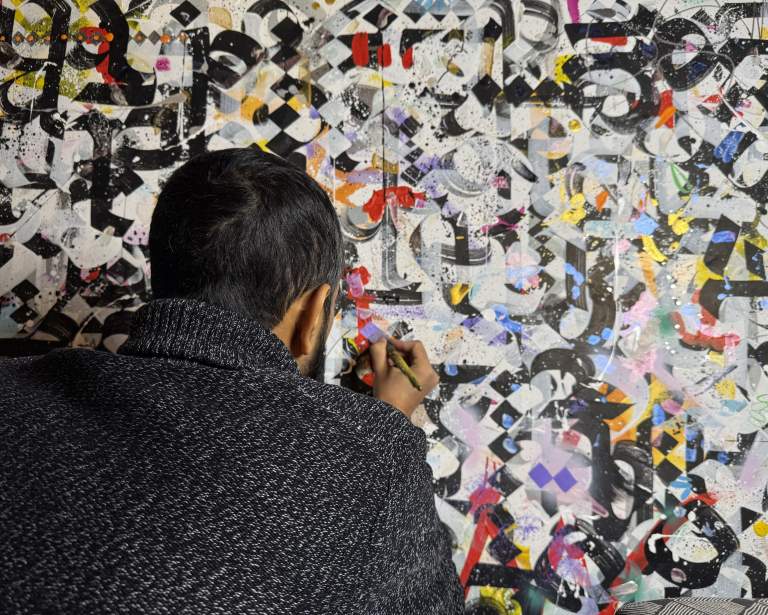
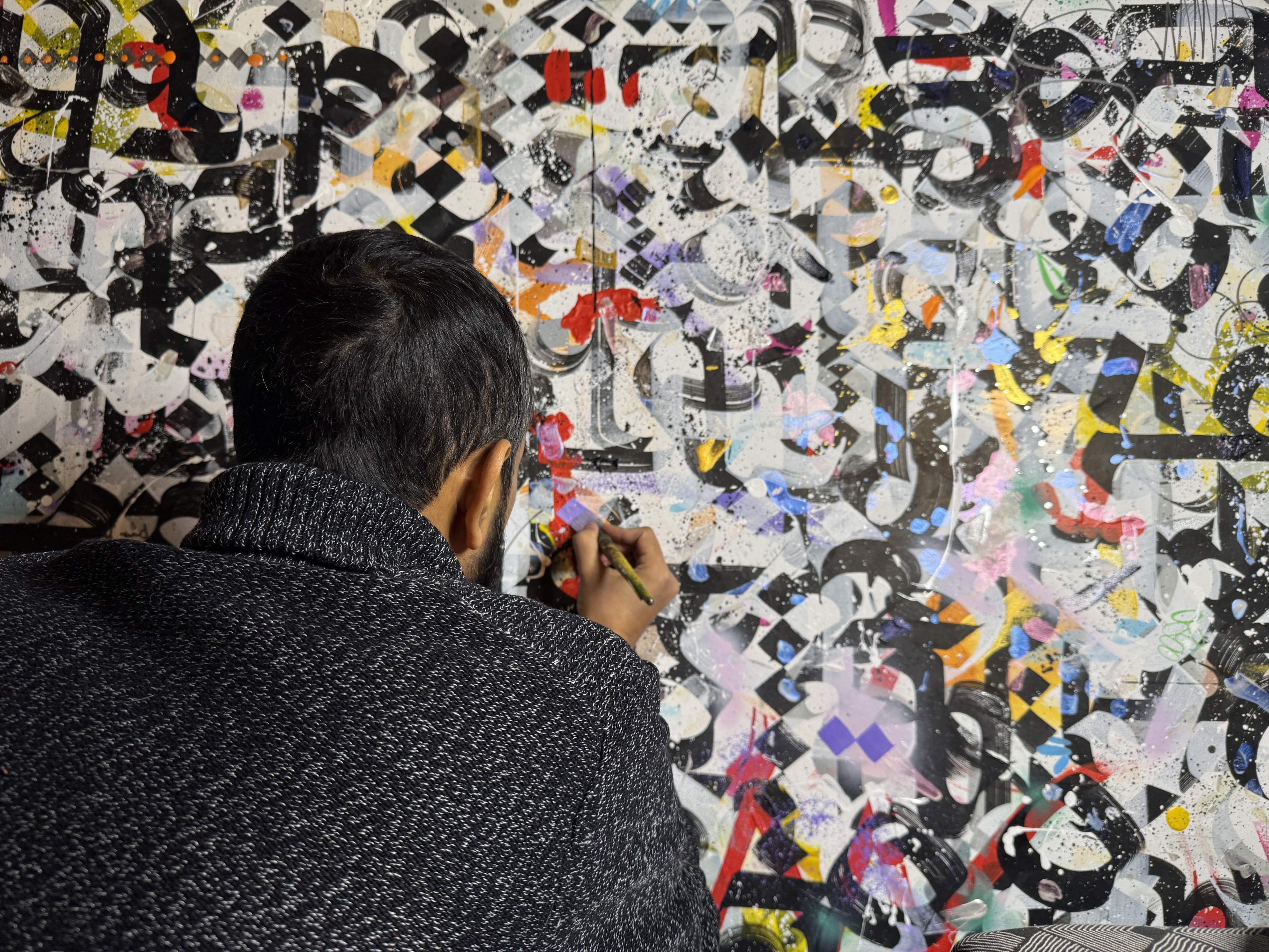
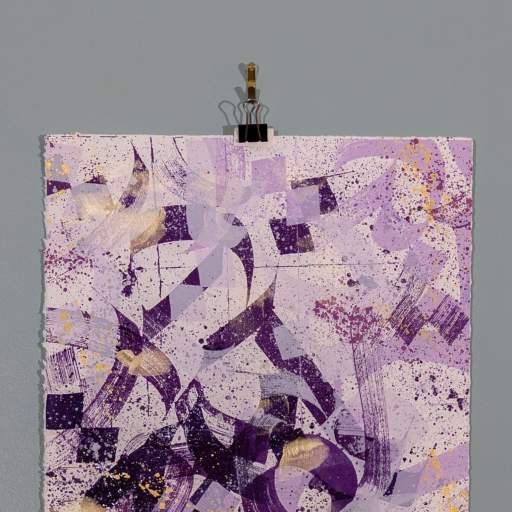
Zaman’s work solidified over a decade ago around an affirmation of life. Layered compositions rooted in public engagement, Calligraffiti, tensions between language, legibility, and meaning in sprawling English, Bengali, and Arabic, inviting viewers to “read the illegible,” encouraging curiosity, mutual respect, and reflection despite the impossibility of fully understanding one another. Again and again, in moments when violence was carried out in the name of power, slaying innocents as collateral to a nation’s war against its own shadow, Zaman's work—insistent, undeniable—was to say there is beauty in the lives that we ignore, and humanity. That innate sense of the preciousness of life takes on new dimension now.
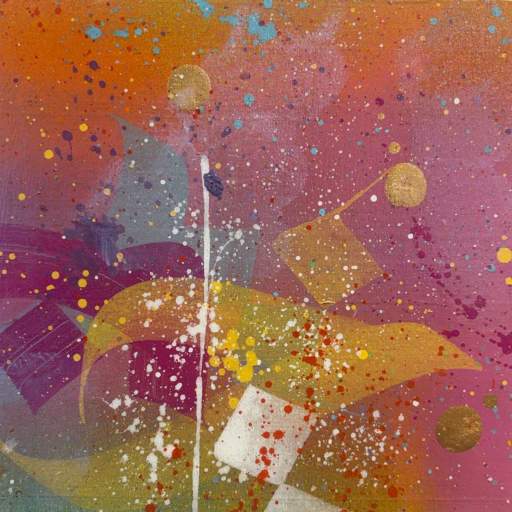
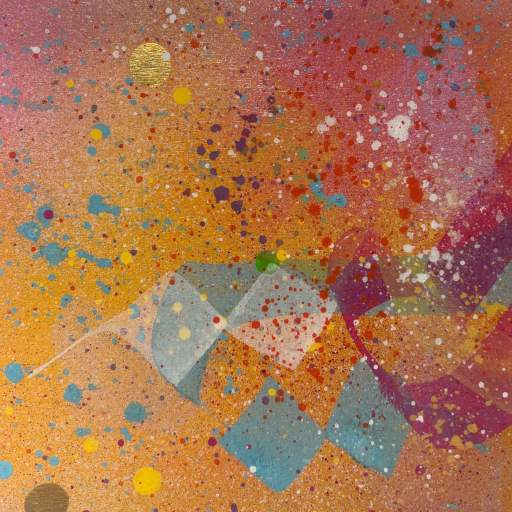
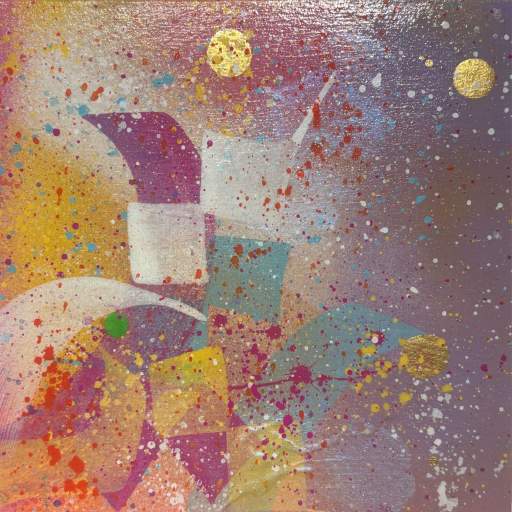
In this body of work, Zaman followed the mark on the paper day by day, allowing color, shape, and gesture to map fear, hope, exhaustion, determination, and grace. Chemotional 2 lives within Surrender to Mercy as a legacy of that process—an affirmation of art as a communal, healing act and a reflection of Zaman’s enduring commitment to connection, mercy, and shared humanity.
The works in Surrender to Mercy were all made while Zaman knew that he was going to die. Some of these were made on good days. He relocated his studio from his longtime residence at Buffalo Arts Studio to his home, where he could paint whenever it was physically possible to do so. These paintings are evidence of will and vision. Zaman says his hand has become more assured in this time, less careful plotting of his calligraphic script, less time wasted in doubt and bullshit. Some works, Zaman’s drawings made in the waiting rooms of Roswell or in hospital beds, are the literal inscription of time lived. Taking a line for a walk, it leads you by the hand, out of fear into grace.
We would like to thank M. Delmonico Connolly for his assistance in writing this statement, following a recent intimate interview with the artist, and ASI and NYSCA for their support.
Work
Muhammad's work is available for purchase via Artsy.
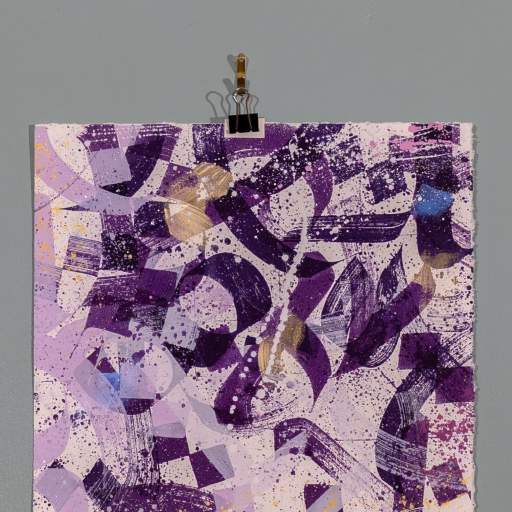
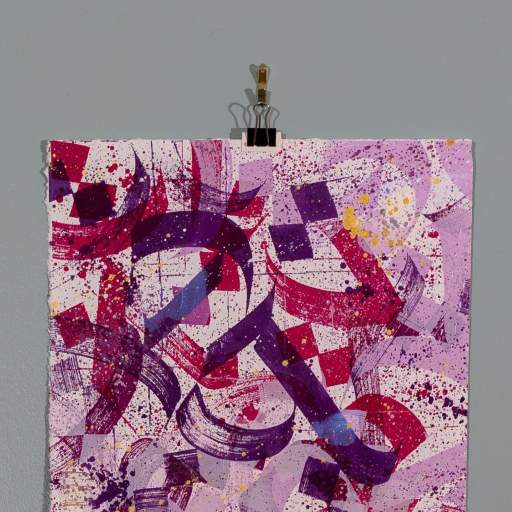
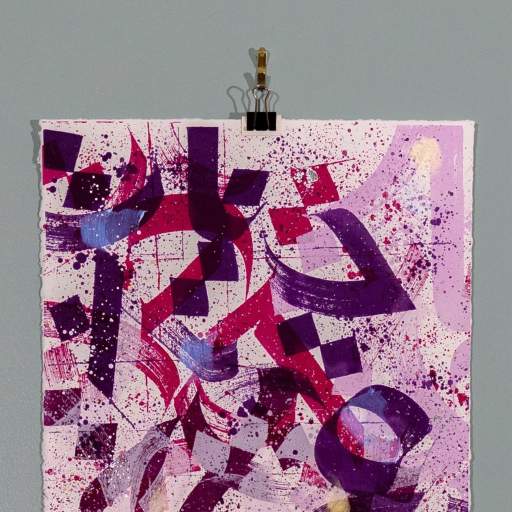
Surrender to Mercy
Essay written by Becca Bass, wife of the late Muhammad Z. Zaman
From the beginning of his artistic practice, Muhammad’s work carried a clear and insistent message about our shared humanity. In his artist’s statement, he wrote that his aim was “to inspire people to share the same place and learn from each other in harmony and mutual understanding.” His paintings held abstracted letters from three languages—Bangla, Arabic, and English—and he took delight in watching strangers stand side-by-side trying to unravel together the messages each piece held.
His art invited curiosity, openness, belonging, and connection. He sought to create positive visibility for his community—for himself and for other Muslim Americans navigating the complexity of the immigrant experience. And to really honor his legacy, it feels important to acknowledge why he painted these themes so insistently. They weren’t abstract ideals to him—they were needs, shaped by his lived experience.
While Muhammad’s work beautifully emphasized what connects us, it emerged from a longing for connection. It came from rupture, loneliness, and profound sensitivity. In 2003, he immigrated to the U.S. from Bangladesh at age twelve, arriving in a country still heavily shaped and shadowed by 9/11. He spent much of his adolescence within a close-knit Muslim community and only began regularly speaking English in his early twenties. He often described feeling anxious and unsafe as a Muslim man in America, miscast in the media and public discourse. He carried an ache of not belonging, the exhaustion of being misunderstood, and the weight of an empathic heart that took on the emotions of others.
He carried more pain quietly than most people ever realized. His desire to build bridges—to invite people toward one another instead of away—came from firsthand experience of what it means to feel unseen and isolated. He understood that pain and beauty are both universal, and his art asked people to hold them together. And he believed deeply that inviting people across lines of difference into conversation about their shared humanity was his life’s work.
And then, in 2023, the ground shifted again under his feet.
When Muhammad was diagnosed with an aggressive form of colon cancer, the core of his work didn’t shift—he still cared about connection, beauty, and bringing people together—but art began serving a different role in his life.
His paintings became a way to explore his relationship with Allah SWT, his trust in Allah’s mercy, and his effort to surrender what he could not control. His art came to more deeply reflect his efforts to stay humble in the face of uncertainty, and to lean into faith when answers weren’t available to us. It also became about following intuition and allowing himself to play, letting the process lead instead of the concept. He gave himself permission to experiment, to make decisions based on what felt good in the moment, and to let the mark or color guide him rather than a predetermined message.
This shift—toward faith, instinct, and surrender—is what anchors the body of work in this exhibition, Surrender to Mercy.
The work in this show is grounded in his Islamic faith, in his trust in Allah’s raḥma—the tender mercy and compassion that holds us through hardship. For him, “surrender” was not defeat but release, it is trusting his belief in Allah’s wisdom over our own limited understanding and Allah’s mercy in the face of earthly suffering.
While living with cancer, art also became a way to actively embody and enact hope. It always had been, but during treatment it became essential. There were days when everything felt heavy and painful and terrifying, and he would say that if he could “just start making marks,” he could pull himself out of the abyss.
I saw it happen many times—if he could bring himself to make a single line, to add a bit of color, slowly he would come back into himself. I watched him pull himself toward the table on days when he could barely stand, and some days I had to help carry or wheel him there. Many days we had to bring the materials to him, and he worked on a lap desk from his bed. I watched him breathe himself back into being through color and shape. I watched art become both prayer and medicine. Making art helped him move through fear, pain, and exhaustion.
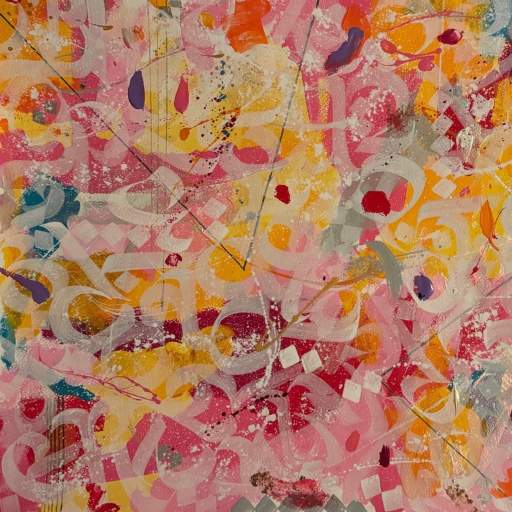
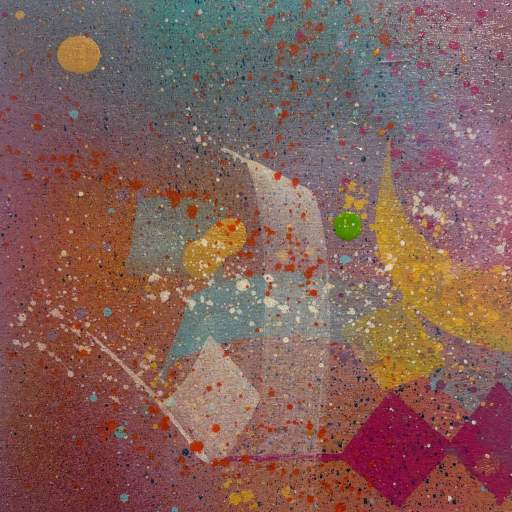
His style changed, too. He began stepping away more from structured lettering and messages and allowed himself more freedom. He leaned into more color, more movement, and more instinct. He gave himself permission to let things be more emergent and intuitive. As he told Matt Connelly in an interview in late 2024, sometimes the most honest thing he could do was “put a flick of paint or use a finger instead of a brush,” not because it carried a message, but because it felt good and brought joy.And despite how brutally and devastatingly difficult life so often was, joy became more abundant.
Muhammad and I often talked about how we were happier and more joyful than we’d ever been before, and he commented on that often in interviews and conversations with friends throughout the last few years. We both found it strange and lovely that we felt more grounded, grateful, and connected while facing cancer than we had in the years before. Illness stripped life down to what mattered most: love, his faith, family, beauty, and awe in ordinary moments.
We learned to savor the small joys—his fabulous cooking, our unruly garden, the warmth of the fireplace, the glow of sunsets, the anchor of holding hands, and, most importantly, time with the kids, Khalid and Khawla. These things became the center of our lives. Poet and fellow cancer warrior Andrea Gibson put it best: “happiness becomes easier to find when you realize you don’t have forever to find it, ” and “awe is the most powerful medicine in the world.”
I feel lucky and humbled by the kind of love we shared. Muhammad talked about how what felt so different and transformative with us was that our souls were deeply in love with each other. Both of us know how rare that is. These final works reflect this chapter—pain and uncertainty, yes, but also calm, clarity, and a kind of steady peace that came from his faith and from being deeply loved and loving in return.
These final pieces are the work of someone who was suffering more than most realized, and someone who found meaning and joy in the middle of it. Muhammad’s art in these years embodies the many generative tensions at the core of being human: resilience and vulnerability, agency and surrender, joy and devastation, fear and trust, loss and love. Threaded through every one of his paintings and drawings is his belief in Allah SWT’s mercy, the power of compassion, and the worth of every human being. These works show a remarkable man who stayed engaged with his life until the very end—not turning away but actively “surrendering to mercy.”
May these works continue the conversations he started.
May they widen the circle of connection he spent his life reaching for. May they invite us to slow down and truly see.
May they remind us how much grief and joy can exist at the same time.
May they help us hold the pain of being human and encourage us to keep actively practicing hope.
May they call us toward one another in the way he deeply believed art could.
A Note from Buffalo Arts Studio
It has been an honor to have Muhammad and his work in our studios, galleries, and Tri-Main neighborhood. His vision was clear from the moment he entered BAS a decade ago – to share the beauty of his experience, of the culture he loved, with the world.
Muhammad’s art radiated with life, full of vibrant color, movement, and meaning. Through a calligraphic style uniquely his own, he wove together the languages that shaped his identity: English, the language of his home in the United States; Bengali, the language of his heritage; and Arabic, the language of his spirituality. His work carried a message of connection, unity, and love, inviting people from all backgrounds to stand together and see one another with compassion.
Muhammad was an active part of the WNY public art program, creating murals and installations with the Buffalo AKG, People’s Park, Artpark, and the Castellani Art Museum. He regularly donated his artwork to support many cultural organizations, including Buffalo Arts Studio, Hallwalls, the Burchfield Penney Art Center, the Buffalo History Museum, and Roswell Park Cancer Institute.
In addition to his extraordinary artistic gifts, Muhammad was a gentle, caring, humble, and generous soul. He was a dear friend to many and deeply loved by all who had the privilege of knowing him. His kindness left an imprint; there was power in his softness. To know Muhammad was to love Muhammad.
As we mourn the loss of this extraordinary artist and beloved friend, we extend our heartfelt condolences to his family and loved ones. We will forever remember Muhammad not only for his powerful art but for the grace, warmth, friendship, and humanity he brought into the world.
We love you forever, Muhammad.
Words from Gallery Executive Director
Working with Muhammad changed the way I see artists and the act of creation itself. He was one of the first artists I met after moving back to Buffalo and I remember feeling intimidated, nervous to ask him questions. While interning at Buffalo Arts Studio, we met in his studio and his space was full and active. It was clear how deeply committed he was to his practice, and that made a lasting impression on me. When he accepted a solo exhibition at Hunt Art Gallery for 2024, I was genuinely excited and that excitement only grew as I got to know him better. He was always thoughtful and professional, his work meticulously organized, with a clear vision for how it should live in space.
During an exhibition at the Saturn Club, June 2025, we spoke about creating simply to create without expectation. In my work with emerging artists every day, I so often see creation tied to survival, income, and momentum. Muhammad reminded me that the need to make art is deeper than all of that and it should not take facing the end of life to experience that pure urgency and desire to create. I will forever be in awe of his character, his generosity, and his kindness. His influence and his work will continue to shape how I move through my role in the arts. I hope visitors experience the same clarity and care in this work that defined Muhammad as both an artist and a person.
Christina Buscarino
Gallery Director, Hunt Art Gallery
Events